

SEO for Landscapers: What It Is, Where to Start, and Who Can Do It for You
By Debbie Neese, Horticulture Certification | 16 years in the green industry | Founder, Offshoot Virtual Landscape Services (est. 2012)
SEO for landscapers means helping your business show up when local homeowners search for landscaping services on Google, Google Maps, and AI tools like ChatGPT. In short, it brings you calls from people who are already looking. Start by setting up your Google Business Profile, building a page for each service, and adding fresh content every month.
You Know Landscaping. SEO Feels Like Another Language.
You can read a slope, price a job, and run a crew with your eyes closed. However, the minute someone says “SEO,” your eyes glaze over. That’s fair. After all, nobody taught keyword research in horticulture class.
So SEO for landscapers keeps sliding to the bottom of the list. It’s not in your wheelhouse. You don’t have a writer. Plus, you don’t feel comfortable doing it yourself, and you don’t have anyone in-house you trust to handle it.
Meanwhile, the company down the road shows up first on Google. Their phone rings. Yours stays quiet, even though your work is better.
Here’s the good news. You don’t need to become a tech expert. Instead, you need a simple plan and someone to help carry it out. Let’s walk through both.
What Is SEO, and Why Should a Landscaper Care?
SEO stands for search engine optimization. In plain English, it means making your website and online listings easy for Google to find, understand, and trust.
Think about how your next customer discovers you. First, they grab their phone. Then they type “landscaper near me” or “retaining wall contractor in Hendersonville.” Finally, they call one of the first few names they see.
Those names come from three places:
- Google Search results. These are the regular blue links on the page.
- The Map Pack. This is the box of three local businesses with a map, stars, and a call button.
- AI answers. Google AI Overviews, ChatGPT, and Perplexity now answer questions directly and name the businesses they trust.
Callout: Good SEO puts your name in all three spots. That way, you get found by people who already want the work done.
Most homeowners do not scroll past the first handful of results. As a result, if you’re not near the top, you’re mostly invisible to the people searching right now.
Why Doesn’t My Web Designer Handle SEO?
This one surprises a lot of owners. You paid good money for a website, so you assume SEO came with it.
Usually, it didn’t. Most web design companies build a great-looking site and hand you the keys. Building the site is one job. Getting it found is a whole other animal.
After launch, here’s what often gets skipped:
- Keyword research for your services and towns
- Page titles and meta descriptions written for search
- Photo file names and ALT text
- New blog posts and service updates
- Google Business Profile posts and photos
- Review requests and replies
In other words, your site can look sharp and still sit on page five. Before you blame the website, check whether anyone is actually working on SEO.
Where Do I Start With SEO for Landscapers? A 5-Step Plan
The fastest way to stop putting this off is to follow a short list. So here are five steps, in order. Each one builds off the last.
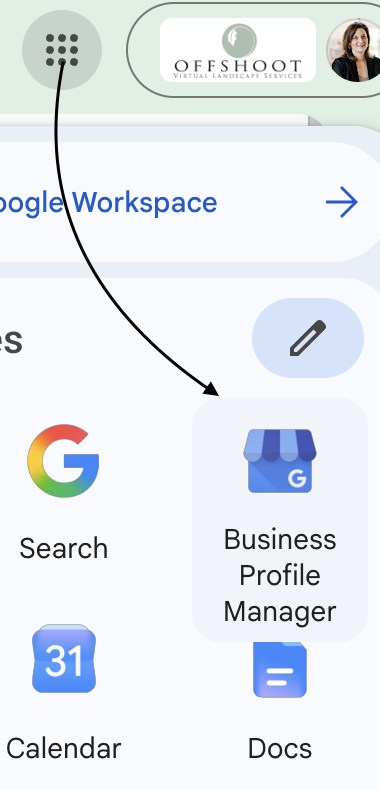
Step 1: Claim and Complete Your Google Business Profile
Your Google Business Profile is the listing that feeds the Map Pack. For many local contractors, it brings in more calls than the website itself.
According to Google’s own guide, local ranking depends on relevance, distance, and prominence. In practice, that means you should:
- Claim and verify your profile.
- Pick the right primary category, such as “Landscaper” or “Lawn care service.”
- List every service you offer, plus the towns you serve.
- Add real job photos every month.
- Post updates, seasonal offers, or project spotlights on a schedule.
For a full walkthrough, read our guide to Local SEO for Contractors and Google Business Profile for landscaping companies.
Step 2: Choose Your Landscaping Keywords
Keywords are simply the words your customers type. Luckily, you already know most of them. They’re your services plus your towns.
For example, a good local keyword looks like this:
- “hydroseeding Hendersonville NC”
- “paver patio installation Asheville”
- “lawn care service near Greenville SC”
Start with one keyword for each service you want more of. Also, skip broad national phrases like “landscaping.” Those are too broad, and the people searching them aren’t ready to hire you.
Where Do You Find Keywords If Your Website Isn’t Built Yet?
This is the best time to do keyword research. After all, it’s much easier to plan your pages around the right words than to rename them later.
You don’t need a website to start. Instead, try these free sources first:
- Listen to your customers. Write down the exact words people use on calls, texts, and estimate requests. For example, a homeowner may say “yard drainage fix” while you say “French drain.”
- Use Google’s search bar. Type a service and your town, then note the suggestions that drop down. Also, scroll to the “People also ask” box for question ideas.
- Check the Map Pack. Search your main services in your towns. Then look at which Google Business Profile categories the top three companies use.
- Try Google Keyword Planner. Google Keyword Planner is free and shows rough monthly search volume. However, you’ll need a Google Ads account and a campaign set up (you don’t have to run ads).
- Compare seasons in Google Trends. Google Trends shows when interest in “aeration” or “mulch” peaks in your state. That way, you know when to publish.
When you want real numbers, a paid keyword data tool fills the gap. At Offshoot, for instance, we use DataForSEO through an AI connector. It shows me monthly search volume, keyword difficulty, and what’s ranking right now for a client’s services and towns. So before a client’s site is even built, we can map each keyword to the page it belongs on.
Tip: Don’t panic if a local keyword shows “0” or “10” searches a month. Small towns often fall below what tools can measure. Those searches still happen, and they come from people ready to hire.
Put every keyword in a simple spreadsheet with three columns: keyword, service, and the page it belongs on. Then hand that list to whoever builds your site.
Step 3: Build One Page for Each Service
Next, give each main service its own page on your website. A single “Services” page with a long list won’t rank well for any of them.
Each service page should include:
- A page title with the service and town (under 60 characters)
- A meta description that guarantees what the reader gets (under 150 characters)
- A clear H1 heading that fits the service.
- Real photos with descriptive file names and ALT text, such as “paver-patio-hendersonville.jpg”
- Your name, address, and phone number, written the same way everywhere.
- A call button or contact form near the top
Google can’t see a photo the way you do. Instead, it reads the file name and ALT text. So label your photos with words, not “IMG_4471.”
For more on getting your details consistent across the web, use our local search engines checklist.
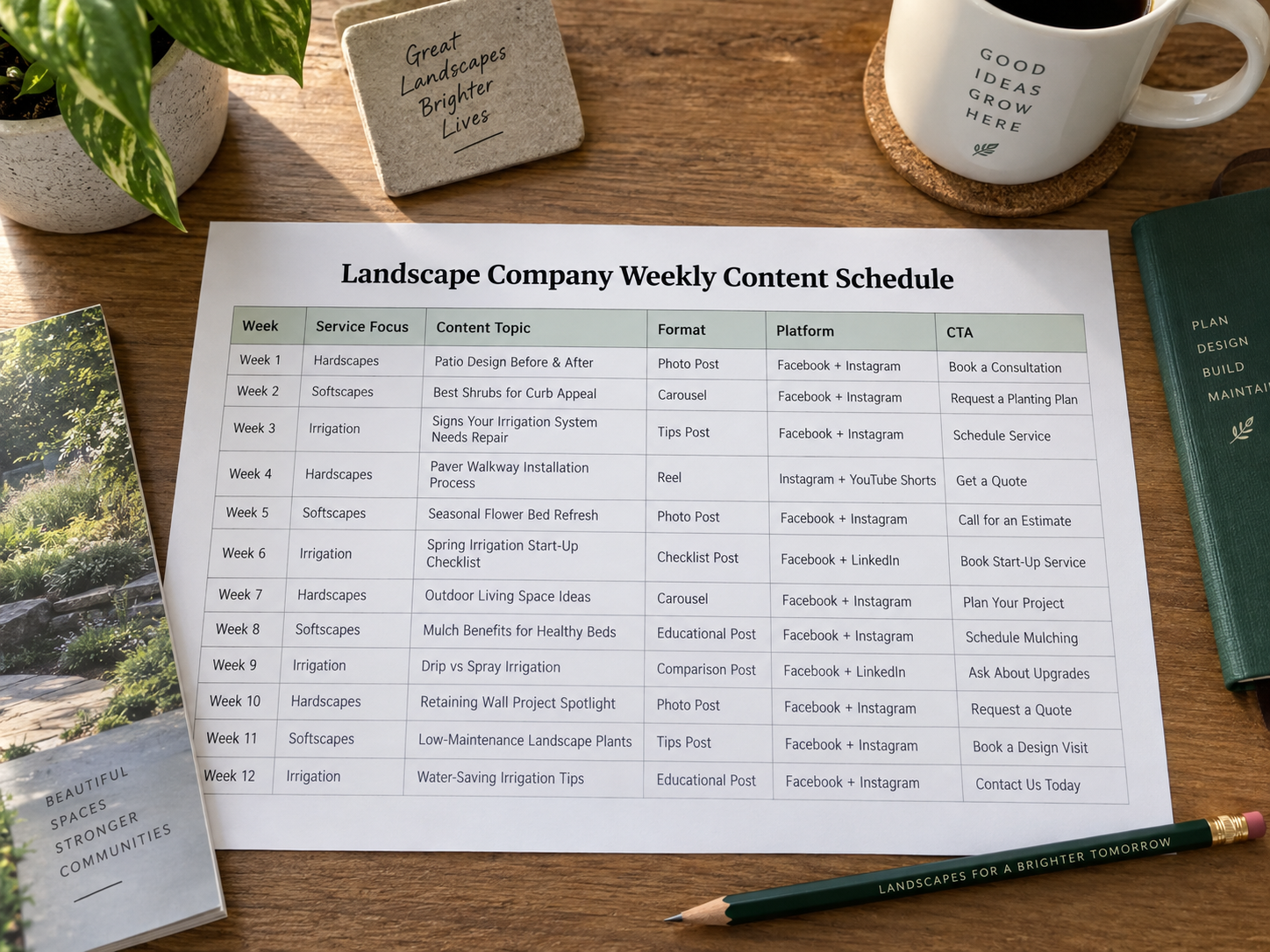
Step 4: Add Fresh Content on a Schedule
Google rewards sites that stay active. Similarly, AI tools pull answers from pages that explain things clearly.
That’s where a blog comes in. Each post answers a real question your customers ask, such as:
- “When is the best time to hydroseed in North Carolina?”
- “How much does a retaining wall cost?”
- “What plants hold a steep slope?”
Then group your posts around your main services. For instance, a hardscape company might build one main post about patios, with smaller posts on pavers, drainage, and maintenance linking back to it. That format tells Google you know the topic inside and out.
Not sure what to write? Grab ideas from our list of 75 tips for writing a landscaping blog.
Step 5: Collect Reviews and Keep Your Listings Consistent
Reviews count toward Google’s “prominence” signal. Plus, they help the homeowner decide to call you instead of the next guy.
So ask every customer, not just the happy ones you’re sure about. If you’re not sure what to say, here’s how to ask customers for reviews without feeling pushy. After that, reply to each review, good or bad. Then use these 3 ideas to put those reviews to work and market them.
Happy customers also send referrals, and referrals often search your name before they call. For that, see how to get referrals for your landscape business.
How Do Landscapers Show Up in AI Search Results?
More homeowners now ask ChatGPT or Google’s AI Overview instead of clicking through ten links. That doesn’t make SEO for landscapers useless. In fact, AI tools often pull their answers from the same websites that already rank well.
To give AI tools something to quote, write the way a homeowner asks:
- Answer first. Put a plain, two-sentence answer at the top of each page.
- Use question headings. For example, “How much does sod installation cost?”
- Add an FAQ section. Keep each answer short enough to stand on its own.
- Use lists and tables. AI tools pull these more easily than long paragraphs.
- Show real experience. Name your certifications, years in business, and service area.
From our own site: In August 2026, we audited virtuallandscapeservices.com for AI search visibility. Every major AI crawler could already read the site. The real gap was how we wrote the posts. Many read like stories instead of clear answers, so AI tools had little to quote. Now every post we write, including this one, opens with a direct answer and ends with an FAQ.
What SEO Mistakes Do Landscapers Make Most?
Most SEO problems come from a few habits. Fortunately, each one has a simple fix.
- Waiting until you “have time.” The slow season never frees up as much time as you hoped. Instead, start with one step this month.
- Using one page for every service. Google can’t tell what you want to rank for. So split your services into their own pages.
- Leave the Google profile alone. An old profile with 2019 photos looks closed. Post something new every week or two.
- Uploading photos with camera names. “IMG_4471” tells Google nothing. Rename each photo before you upload it.
- Asking only for referrals, never for reviews. Word of mouth is great, but new customers still check your stars first.
- Guessing instead of checking. Google Search Console is free and shows which searches bring people to your site. Look at it once a month.
Should You Do SEO Yourself, Hire an Agency, or Use a Virtual Assistant?
There’s no single right answer. Still, it helps to see the options side by side.
| Do It Yourself | SEO Agency | Landscape Virtual Assistant | |
| Cost | Your time | Monthly retainer, often the priciest option | Hourly or package pricing |
| Your time each month | High | Low | Low |
| Writes your blog content | You do | Sometimes, for an added fee | Yes |
| Knows the green industry | Yes | Varies | Yes |
| Handles your Google Business Profile | You do | Often | Yes |
| Also helps with office tasks | No | No | Yes |
| Best for | Owners with time and interest | Larger budgets and competitive markets | Busy owners who want it done right without learning it all |
If you have evenings free and enjoy this stuff, DIY can work. On the other hand, if the idea of writing a blog post makes you want to pull weeds, hand it off.
What a Landscape Virtual Assistant Can Take Off Your Plate
We get it. You didn’t start a landscaping company to write meta descriptions. You started it to build beautiful outdoor spaces and grow a business.
That’s exactly where Offshoot Virtual Landscape Services steps in. I’ve spent years in the green industry, and I work as an extension of your office. Because we know the trade, you won’t have to explain what hydroseeding is or why spring is your busy season.
Here’s what I handle on the SEO side:
- A marketing strategy built around the services you want to sell more of
- A content plan based on your services and the towns you serve
- Blog pillars that group posts around your main keywords and services
- SEO blog writing in your voice, so it sounds like you
- Google Business Profile updates, including posts and fresh photos
- Updated website photos with proper file names and ALT text
- Review requests sent to your customers, plus replies
- Website content updates, from service pages to page titles
You can see the details in our website project management package.
What’s at Stake If You Wait?
Every week without a plan, the phone call goes to whoever shows up first. Sadly, the best contractor doesn’t always get that call. Google sends it to whoever it can find.
Now picture the other side. Your profile is full of fresh photos. Your service pages rank in your towns. Homeowners call already knowing what you do. Best of all, you didn’t write a single word of it yourself.
A Simple Monthly SEO Routine You Can Hand Off
With SEO for landscapers, consistency beats a big push once a year. So here’s a monthly checklist you, or your assistant, can follow:
- Post two to four updates on your Google Business Profile.
- Upload at least five new job photos with descriptive names.
- Publish one or two blog posts that answer customer questions.
- Request reviews from every customer who finished a job this month.
- Reply to every new review within a few days.
- Check your name, address, and phone number on your main listings.
- Review Google Search Console in order to see which pages bring visitors.
- Update one older page or post with new photos or details.
Keep this list in a shared spreadsheet so nothing escapes. That way, anyone on your team can see what’s done.
SEO for landscapers is one piece of a bigger picture. To see how it fits with referrals, email, and social media, read our guide for marketing strategies for landscaping business owners. Once your SEO starts making the phone ring, make sure you answer every call with these phone apps and systems for landscape leads. To understand how homeowners search in the first place, check out the top three ways your prospects find a landscaper.
For Google’s own basics, the SEO Starter Guide from Google Search Central is a solid reference.
SEO for Landscapers: Frequently Asked Questions
How much does SEO cost for a landscaping company?
SEO costs vary by who does the work. Doing it yourself costs your time. Agencies usually charge a monthly retainer, while a landscape virtual assistant typically works on hourly or package pricing that fits smaller budgets.
How long does SEO take to work for landscapers?
Most landscaping businesses see early changes in three to six months. Google Business Profile updates commonly show results sooner, while blog content and service pages build steady traffic over time.
Is SEO still worth it with AI search?
Yes. AI tools like ChatGPT and Google AI Overviews pull answers from websites that are well organized and clearly written. Good SEO gives those tools accurate information about your business to share.
Can I do SEO for my landscaping business myself?
Yes, you can handle the basics yourself. Start with your Google Business Profile, service pages, and review requests. However, most owners run out of time for regular blog writing and updates, so many hand those tasks to an assistant.
Where can I find keywords for a new landscaping website?
Start with free tools: Google search suggestions, the “People also ask” box, Google Keyword Planner, and Google Trends. For exact search volumes and difficulty scores, use a paid keyword data tool, or have your virtual assistant run the research before the site is built.
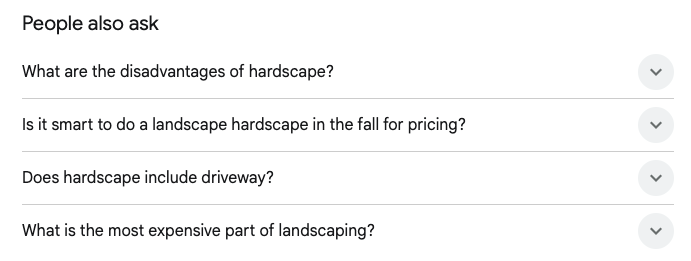
At the end of a Google Search Page, you’ll find a list of phrases that relate to what your users are typing in for search queries related to your topic. You can use these queries for content and keyword strategies.
What is local SEO for landscapers?
Local SEO for landscapers focuses on showing up in searches tied to your service area, such as “landscaper near me.” It relies mostly on your Google Business Profile, reviews, and consistent business details across the web.
Ready to Get Found Without Doing It All Yourself?
You handle the field. Let us help with the rest. Offshoot Virtual Landscape Services can build your content plan, write your posts, and keep your Google profile active, so your phone rings with people already looking for you.
Book a consultation with Offshoot Virtual Landscape Services and let’s get your business found.
About the Author
Debbie Neese is the founder of Offshoot Virtual Landscape Services, LLC, a virtual assistant and back-office firm serving landscapers, hydroseeders, lawn care companies, and tree services across the U.S. She started in the green industry in 2010, studying horticulture and working at a nursery, and founded Offshoot in 2012. She holds a Horticulture Certification and an Associate of Science in Business Administration. Her gardening expertise has appeared in Martha Stewart, Southern Living, The Spruce, Well+Good, and Family Handyman.


