

How to Get Referrals for Your Landscape Business (Without Feeling Pushy)
Quick answer: A landscaping referral program is a simple system for asking happy clients to send you new customers. Then you thank them with a reward, like a service credit on their next bill. Most owners never set one up. Instead, they wait for word of mouth. Asking on purpose turns that luck into a steady lead source.
You already have fans. Your clients brag about their new patio to the neighbors. They message you photos of the lawn in May. They tell you your crew is the best they’ve ever had.
So why aren’t those compliments turning into new jobs?
Usually, the answer is simple. Nobody asked. You’re running crews, pricing estimates, and answering the phone from the truck cab. As a result, “ask for referrals” lands on the list right after “clean out the truck.”
A landscaping referral program fixes that. In this post, you’ll get a five-step plan, word-for-word scripts, and a real client story. Best of all, none of it requires you to feel like a used-car sales associate.
Why Most Landscapers Never Get the Referrals They’ve Earned
Here’s the biggest mistake I see: owners never ask. They assume happy clients will spread the word on their own. Some do. Most don’t, because they’re busy too.
That’s not a knock on you. In fact, it’s rarely a question of knowing better. Most landscape owners know referrals are their best leads. However, they don’t have the time, the system, or the help to follow through.
Meanwhile, those leads are worth pursuing. According to Nielsen’s trust in advertising research, “88% of people trust recommendations from people they know more than any other channel.” In other words, a neighbor’s word beats your best yard sign.
Referrals work best as one piece of a bigger plan. If you haven’t mapped that plan yet, start with these marketing strategies for landscaping business owners. Then come back here to build the referral piece.
How to Build a Landscaping Referral Program in 5 Steps
You don’t need software or a marketing degree for this. Instead, you need a clear moment to ask, a few simple words, and a way to say thanks.
1. Decide When to Ask
Timing matters more than wording. Ask while the client is still excited, not three months later.
The best moments to ask:
- At the closing walkthrough. The beds are fresh, the pavers are clean, and the client is smiling.
- When a client compliments you, a text that says, “The yard looks amazing,” is an open door.
- At the end of the season. For maintenance clients, fall is a natural time to say thanks and ask.
- When you fix a problem fast, clients remember how you handled the issue.
Put these instances on your job checklist. That way, asking becomes part of closing out a job, just like the final invoice.
2. Use a Simple Script
Most owners skip the ask because it feels awkward. So take the guesswork out with a script.
In person, at the walkthrough:
“I’m really glad you love how it turned out. Most of our work comes from clients like you. If a friend or neighbor ever needs help with their yard, would you pass along my name?”
By text, after a compliment:
“Thanks so much! That made our crew’s day. If you know anyone who needs landscape work, we’d love an introduction. You’ll get a $50 credit on your next service when they book.”
By email, at the end of the season:
“Thank you for trusting us with your property this year. Before winter, we’re opening a few spots for new clients. If you refer a friend who signs up, we’ll take $50 off your spring cleanup.”
Notice the pattern. First, say thanks. Next, make the ask. Finally, explain the reward. Keep it brief and pleasant.
3. Offer a Service Credit
Across the landscape businesses we support, service credits tend to work best. A credit costs less than cash and brings the client back for more work.
A few ground rules keep it fair:
- Pick an amount that fits your average job. For maintenance, $25 to $50 is common. For installs, $100 or more makes sense.
- Apply the credit after the referred job is paid. That protects you from rewarding a lead that never books.
- Consider a credit for the new client too. A “you both save” offer gives the new client a reason to call.
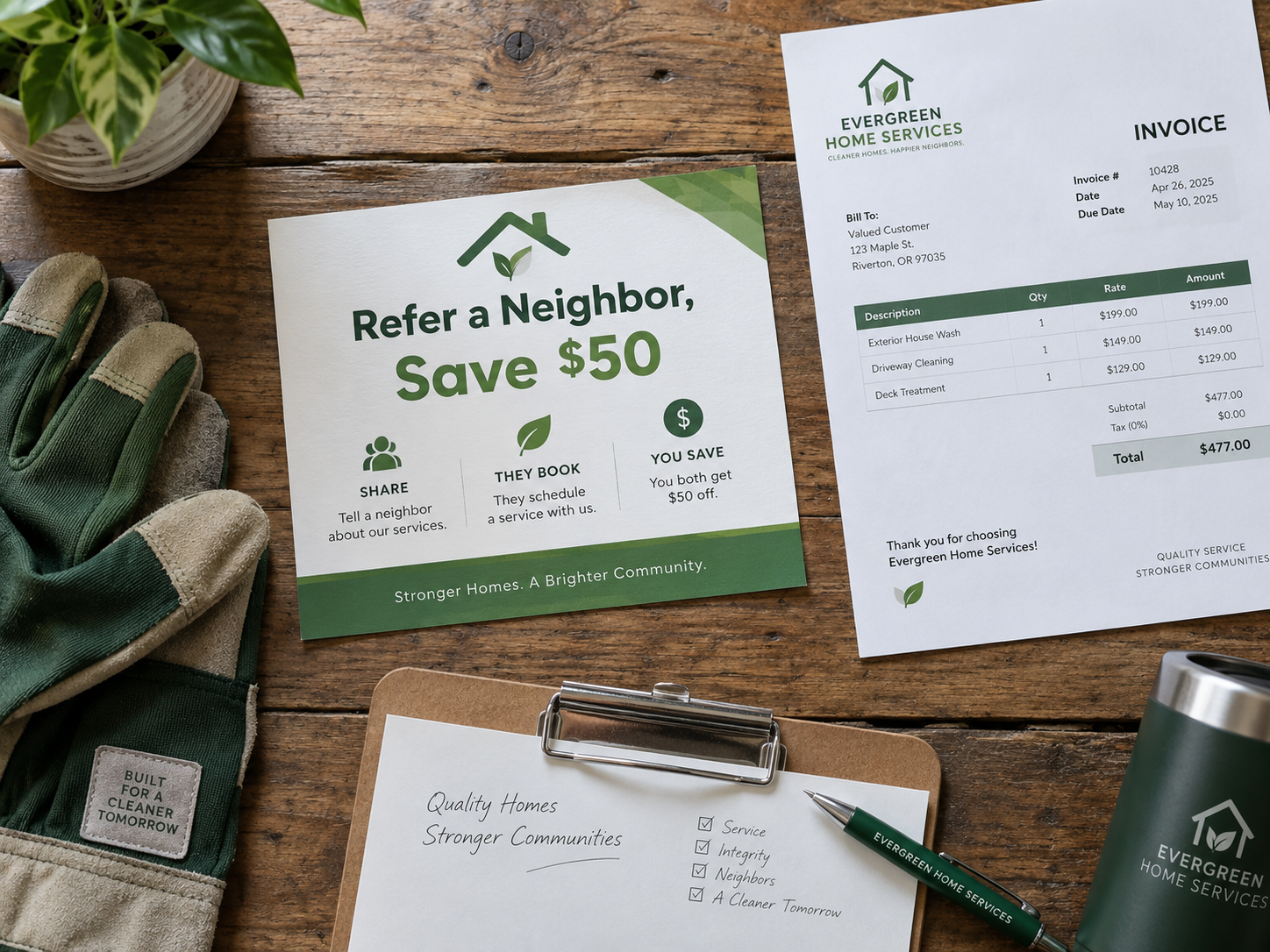
- Put the terms in writing. Add them to your invoice footer or website so nobody’s confused.
Rewarding a referral is fine. Rewarding a review is a different story, which we’ll cover below.
4. Make Referring Easy
Clients won’t hunt for your phone number. So put it right in front of them.
- Leave a referral card with the final invoice or at the door after service.
- Insert a line on every invoice, such as “Know someone who needs yard work? Refer them and save $50.”
- Add it to your email signature so every message does a little marketing.
- Mention it in your newsletter. A monthly email newsletter for your landscaping business keeps past clients thinking about you.
Also, make sure your truck, yard signs, and website all show the same phone number. Otherwise, a referral may call an old number.
5. Track Every Referral and Say Thank You
This is where most referral programs fall apart. The ask goes out, a new client books, and then nobody remembers who sent them.
To prevent that, track three things:
- Who referred the new client?
- Whether the new client booked and paid
- When the credit was applied
A simple spreadsheet works. If you use a CRM like Jobber, add a “referred by” field or tag. Either way, check it weekly.
Then, send a thank-you. A handwritten note takes two minutes, yet clients remember it for years. Plus, a thanked client is far more likely to refer again.
Your Second Referral Source: The Trades You Don’t Do
Who to approach
- Irrigation and sprinkler contractors — they see every dry spot and dead bed on the property
- Tree services — they work above your beds and clean up after storms
- Hardscape and masonry crews — patios and walls almost always need planting afterward
- Fencing companies — new fence lines expose bare, ugly ground
- Pool builders — the landscaping around a new pool is its own project
- Grading, drainage, and excavation — the yard has to be put back together
- Pest control and lawn treatment — if you don’t spray, somebody has to
- Local nurseries and garden centers — homeowners ask them daily for an installer
- Gutter and pressure washing companies — same customers, different season
How to Make the First Call
Don’t network. Just call somebody and offer them work.
Here’s the difference. Networking sounds like “we should grab coffee sometime.” Offering work sounds like this:
“Hey, it’s Mike over at Miller Landscaping. I turned down two irrigation repairs this month because we don’t do that side of it. I’d rather send those to somebody good than watch the homeowner pick a name out of a hat. Can I send you the next one?”
Notice what you didn’t ask for. You led with giving, not getting. Almost nobody says no to free work, and the return offer usually comes up on its own within a minute or two.
Then keep it simple:
- Give first. Send them one real lead before you ask for anything.
- Make the handoff warm. Don’t just hand over a phone number. Text both parties at once with names attached, so the customer feels walked over instead of dumped.
- Follow up once. A week later, ask how it went. That one call tells them you’re paying attention.
- Ask plainly. “If somebody asks you about planting or mulch, I’d love the call.”
- Write it down. Keep a simple list of who you sent where and when, so you can see the score.
Keep It Even, or It Quietly Dies
Most partnerships fall apart for a boring reason. One side sends everything, the other side sends nothing, and after four months the giver stops calling.
So track it, the same way you track the rest of your landscaping referral program. A note in your phone works fine. If you’ve sent six and gotten one back, have the conversation before you resent them — usually the partner simply forgot you existed. A quick check-in every quarter fixes most of it.
As for referral fees, tread carefully. Cash kickbacks between licensed contractors are restricted in some states, and they change the relationship into a transaction. Reciprocal work is cleaner and it’s what most trade partners actually want. If you do decide to pay, ask your accountant and check your state’s contractor licensing rules first.
Vet Them Before You Hand Over Your Name
Here’s the part that bites people. Their bad job becomes your bad reputation, because the homeowner remembers who recommended them.
So before you send anybody a client, do this:
- Look at their reviews the way a homeowner would
- Confirm they’re licensed and insured, and ask for the certificate
- Send them one small job first and watch what happens
- Call the customer afterward and ask how the partner treated them
If a partner is slow to call people back or leaves a mess, cut them loose. You worked too hard for that name.
Don’t Let a Referred Lead Hit Voicemail
A referral is a warm lead. The neighbor already trusts you before they call. Still, that trust fades fast if nobody picks up.
Think of your phone as the front door of your landscaping referral program. A friendly, prepared tone on the line seals the deal. Here’s how to handle answering your business phone the right way. Also, check out these phone apps and systems that keep you from missing landscape leads.
How Reviews and Referrals Work Together
Reviews are referrals from strangers. When a homeowner can’t ask a neighbor, they read your Google reviews instead.
So the two feed each other:
- Happy clients who refer you are often happy to leave a review
- Prospects check your reviews before they call, even when a friend sent them.
- A strong Google Business Profile for your landscaping company backs up what your referrals say.
Once you have reviews, put them to work by marketing your reviews.
Info about rewards: A referral reward is fine. However, don’t offer credits or gifts in exchange for reviews. The FTC’s rule on consumer reviews bans rewards tied to positive reviews, and Google’s review policies don’t allow paid reviews. Keep your two programs separate.
A Real Example: When Happy Clients Did the Selling
One landscape contractor we support had a great reputation and no system to show it off.
Our team answered his phones. As a result, we talked with his clients every week. They loved him and his crew, and they said so on almost every call. So we thought, why not package that praise?
First, we started asking his happy clients for reviews on Google Business Profile and Angi (formerly Angie’s List). The reviews came in by the dozens. Before long, those reviews were working like referrals from people he’d never met.
The results speak for themselves:
- Revenue grew from about $250,000 to $1 million in four years. Before that, he struggled through the winter months.
- He did no other advertising. Happy clients and their reviews drove the growth.
- Leads got more serious. Eventually, demand was high enough to charge $100 per consultation, credited back if the client hired him. That filtered out tire-kickers and added credibility.
- Proposals went out faster. Because the leads had paid, he knew they were serious, so he focused on them.
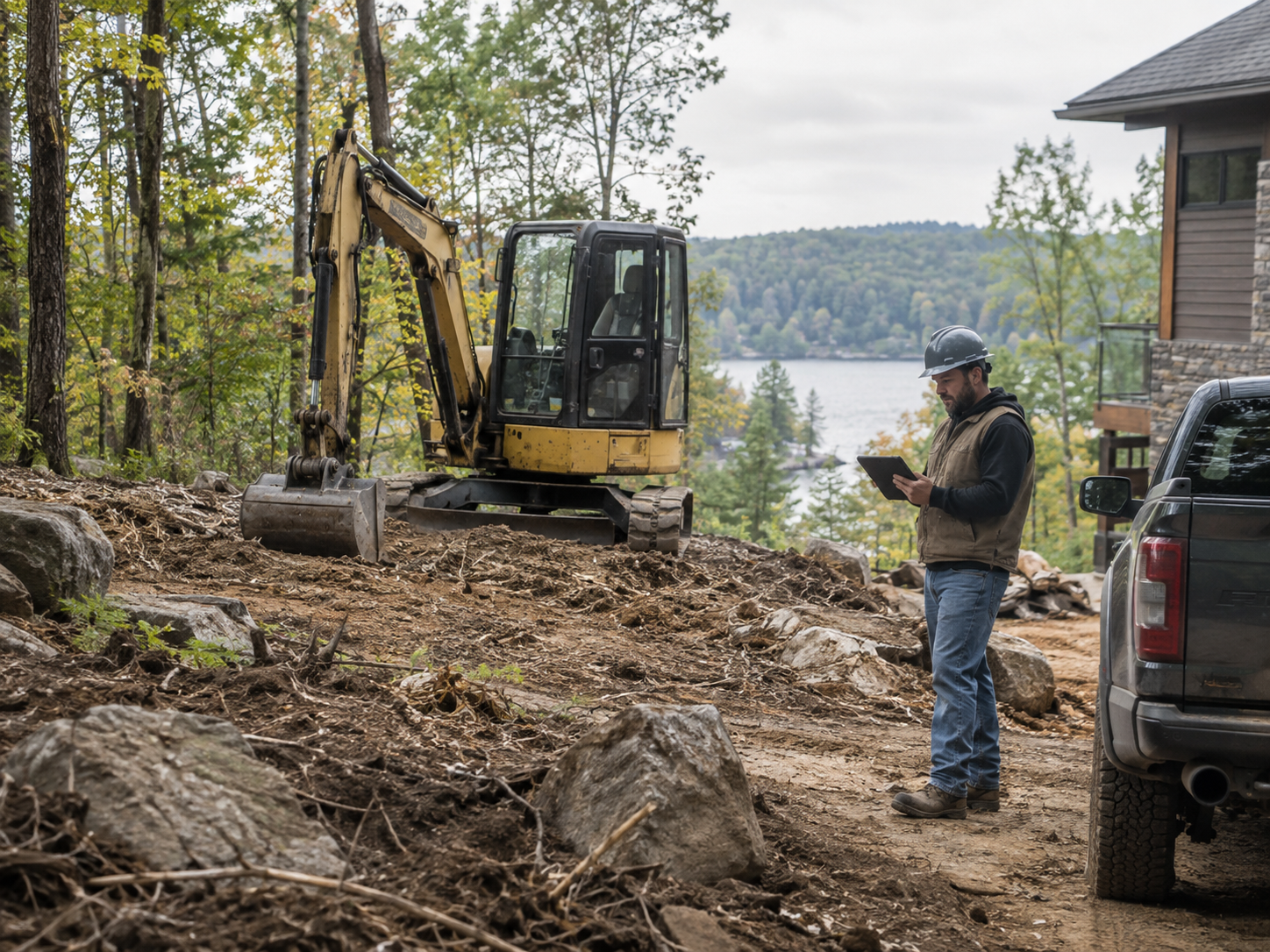
- He expanded. That growth paid for more machinery and a new, high-margin land-clearing division.
The lesson? His clients were already talking. He just needed someone to capture it.
That’s where a green-industry virtual assistant helps. At Offshoot Virtual Landscape Services, we can send the review and referral requests, track who sent whom, apply credits, and mail the thank-you notes. Meanwhile, you stay in the field.
What Happens If You Keep Waiting
Without a system, referrals stay random. You’ll have a busy spring, then a quiet stretch, and you won’t know why. Meanwhile, competitors who ask will book the neighbors you already impressed.
Now picture the other side. Your happy clients send friends regularly. New leads call already trusting you. You spend less on ads, and your winter calendar isn’t so empty. That’s what a simple landscaping referral program can do.
Landscaping Referral Program FAQs
How much should I offer for a landscaping referral?
Most landscape businesses offer a $25 to $50 service credit for maintenance referrals. For larger install or hardscape jobs, $100 or more is common. Match the reward to the value of the new job, and apply it after the referred client pays.
When is the best time to ask a client for a referral?
Ask when the client is happiest. That’s usually at the last walkthrough, right after they compliment your work, or at the end of the maintenance season.
Is it legal to reward customers for referrals?
Yes. Rewarding clients for recommending new customers is a common practice. However, don’t reward clients for leaving reviews. The FTC bans rewards tied to positive reviews, and Google doesn’t allow incentives for reviews.
What’s the difference between a referral and a review?
A referral is a direct recommendation from a client to someone they know. A review is a public rating that strangers read online. Both build trust, and a good landscaping referral program usually leads to more reviews too.
How do I track referrals without a CRM?
Use a simple spreadsheet. List the referring client, the new client, whether the job was paid, and the date you applied the credit. Check it weekly, or have a virtual assistant keep it up to date.
Should I pay another contractor a referral fee?
Usually you shouldn’t need to. Most trade partners want reciprocal work, and it keeps the relationship a relationship instead of a transaction. Cash referral fees between licensed contractors are also restricted in some states, so check your state’s contractor licensing rules and talk to your accountant before you pay anyone.
Ready to Turn Happy Clients Into Your Best Lead Source?
You’ve already done the hard part. Your clients love your work. Now it’s time to make sure they tell their friends.
If you don’t have time to run the asks, track the referrals, and send the thank-yous, you don’t have to do it alone. Book a consultation with Offshoot Virtual Landscape Services, and let’s build a landscaping referral program that runs while you’re in the field.
About the author: Debbie Neese is the founder of Offshoot Virtual Landscape Services, LLC, a virtual assistant and back-office firm for green-industry businesses across the U.S. She holds a Horticulture Certification and an Associate of Science in Business Administration, has more than 14 years of green-industry experience, and has been published in Men’s Journal, Martha Stewart, Southern Living, The Spruce, Well+Good, and Family Handyman.


