

Gmail Filters for Lawn and Landscape Businesses: A System That Actually Catches Leads
You’re on a job site, phone buzzing with crew texts, and somewhere in your Gmail inbox a new lead is sitting behind eleven newsletters and a fertilizer vendor’s monthly blast. So is that lead still waiting for you tomorrow? Maybe. Or maybe a competitor already called back. That’s the real cost of running a landscaping business without an inbox system.
Gmail filters for lawn and landscape businesses solve exactly this problem. They’re not a productivity trick for tech-savvy office workers — they’re a simple way to make sure the emails that make you money never get buried under the ones that don’t. In short, a Gmail filter is a saved rule that automatically sorts, labels, or routes an email the moment it lands, based on who sent it or what it says.
Why Lead Emails Get Buried in a Landscaping Inbox
Think about everything landing in your inbox on a given week. A homeowner asks for a quote. Your mulch supplier confirms an order. A business consultant follows up on a call. There’s also a newsletter you signed up for two years ago and never unsubscribed from. All of it lands in the same place, in the same font, with the same importance — until you open it.
That’s the problem. Your inbox treats a six-figure lead exactly the same as a coupon email. Nothing separates them until you read every single one, and most landscaping owners simply don’t have that kind of time between job sites, crew calls, and estimates.
“Filters Are Too Technical for Me” — No, They’re Not
Here’s a myth worth busting before we go further: filters aren’t an IT project. You don’t need a tech background, and you don’t need to hire anyone to write code. Building a Gmail filter takes about five minutes. Once you set it, it runs quietly in the background forever.
Step 1: Build Your First Filter
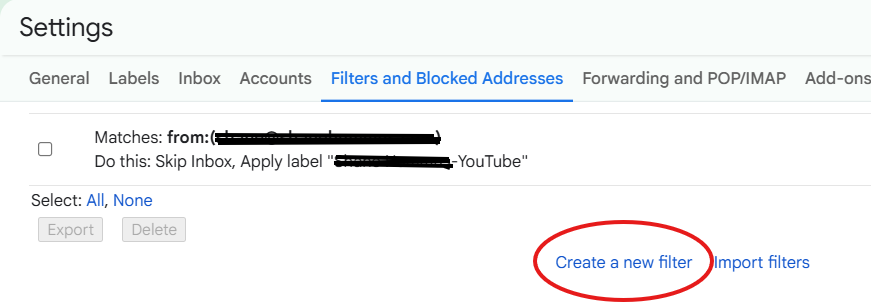
Start with the emails you want out of your main inbox. Go to Settings (the gear icon, top right) and choose Filters and Blocked Addresses, then Create a New Filter. From there, you can filter by sender, by subject line, or by using a “plus” address trick: add +leads, +vendors, or +newsletter after your name in any email address you hand out (yourname+leads@gmail.com, for instance), and Gmail will treat that tag as searchable. Click Create Filter With This Search once your criteria are set.

Step 2: Route It Instead of Just Labeling It
A filter that only labels an email still leaves it sitting in your inbox. So take it one step further: check Skip the Inbox, apply a label, and, if it fits, categorize it. That way, the email is sorted and out of your way the moment it arrives, not just tagged for you to deal with later.
Step 3: Build a Full Label System for Your Business
One filter helps. A full system helps a lot more. For a lawn or landscape business, a handful of labels covers almost everything: Leads, Active Clients, Vendors and Materials, Invoices and Billing, and Marketing or Newsletters. Once each category has its own filter, your inbox effectively sorts itself, and the only messages left in your main view are the ones that actually need your attention today.
Step 4: Turn Your Leads Label Into a Tab You Can’t Miss
Labels only help if you remember to check them. So add one more layer of protection with cloudHQ’s Gmail Tabs extension. Once you install it, it turns any label — including the Leads label you just built — into its own named tab at the top of your inbox. It sits right alongside your regular Gmail tabs. That means a new lead doesn’t just get filed quietly out of sight; it shows up in a tab labeled “Leads” every time you open Gmail, whether you remembered to check your labels that day or not.
Step 5: Test It, Then Let It Run
Once you build your filters, labels, and Leads tab, send yourself a test email to each address variation. Confirm it lands where you expect. After that, the system runs on its own. Check back every few months to add a new vendor or update a label, but otherwise, you’re done.
Common Questions About Gmail Filters
Will a filter accidentally hide a real lead?
Not if it’s built correctly. Filters sort based on sender or subject line. As long as your Leads filter around your contact form or listing site (Angi, Google Business Profile, your website), genuine leads land exactly where they should.
What’s the difference between a filter, a label, and a tab?
A tab is different. Using a free tool like cloudHQ’s Gmail Tabs extension, you can turn that label into its own visible section at the top of your inbox. That way, even a label you forget to check still shows up somewhere you’ll see it.
Do filters work the same way on the Gmail mobile app?
Yes. Filters run on Google’s servers, not your device, so anything sorted on your desktop is already sorted when you check email from the truck.
How often do I need to maintain this?
Barely at all. Add a filter when a new vendor or supplier shows up; otherwise, the system keeps running with no upkeep.

Where Offshoot Comes In
We know what it’s like when a lead email gets buried under three newsletters and a spam blast, and by the time you find it, the homeowner has already called someone else. It happens to good businesses every week, and it’s rarely because the owner doesn’t care — it’s because nobody has time to build the system.
That’s where we can help. Because we work in the green industry every day, we know the difference between a real lead, a vendor confirmation, and a business consultant’s follow-up the moment it lands. Even when a client’s inbox looks like chaos to anyone outside the industry, we can tell what’s what. We’ve set this exact filter system up for lawn and landscape businesses that were losing leads to a messy inbox. Once it’s running, we answer those leads the same day instead of letting them sit for a week.
If you’d rather have us build and run it than tackle it yourself, we can do either. We can do it as a one-off project to set up your filters and labels correctly, or on a monthly hour package if you want ongoing support beyond your inbox.
What’s at Stake — and What’s Possible Instead
Without a system, a buried lead is a lost job, and a lost job is revenue that goes to whichever competitor responded first. That’s the honest stake here. On the other hand, with filters, labels, and a Leads tab running quietly in the background, your inbox surfaces what matters the moment it arrives, your response time improves, and you get to stop wondering what you might have missed.
Ready to Stop Losing Leads to a Messy Inbox?
You don’t have to build this alone, and you don’t have to keep digging through newsletters to find the emails that matter. Book a consultation with Offshoot Virtual Landscape Services, and let’s set up your Gmail filters so nothing important slips through again.


