

Breaking Budget Constraints: How to Scale Your Landscaping Business Without Breaking the Bank
You’re booked solid. Your crews run sunrise to sunset. Every estimate gets approved. On paper, you should be thriving. So why does your bank account tell a different story? Let’s talk about how to scale a landscaping business on a budget in just 90 days. Stay with me, here.
If you’re busy but broke, growing but stressed, you’re not alone. This is the puzzle of the green industry: high revenue, thin margins, and cash flow swings that can wreck a year in a few bad weeks. It’s exactly why learning to scale a landscaping business on a budget matters more than chasing more work.
The usual advice? “Just grow your revenue.” But you already know the truth. More jobs with the same broken systems means more chaos, more cash flow problems, and more nights wondering how you’ll cover winter payroll.
Then there’s the advice that actually hurts: “Spend money to make money.” Buy the excavator. Hire three more crew. Sign with the marketing agency. When your margins are already tight, that’s not just unhelpful. It’s dangerous.
And here’s the most expensive myth of all: “Lower your prices to win the work.” Competing on price is a race to bankruptcy. You can’t scale on 5% margins. Every dollar you cut to land a job is a dollar you never get back.
The smarter path is simple. Optimize before you expand. Fix the leaks before you pour in more water. That’s what this guide is about.
How to Scale a Landscaping Business on a Budget: Optimize Before You Expand
Whether you’re a solo operator dreaming of your first crew, a small team stuck at a growth ceiling, or an established company stalled in the $750K–$2M range, the play is the same. You don’t need more money to scale. You need better systems, sharper pricing, and a clear plan.
Below is that plan, in four parts. Work through them in order. Each one frees up cash you can reinvest in the next.
Part 1: Know Your Real Numbers (Because Busy Doesn’t Equal Profitable)
Before you scale, you need to know where you stand. Most owners track revenue closely but only guess at their true costs. That gap is where profits vanish.
Calculate your true cost per service hour
When you price a job, are you counting all of this?
- Labor burden. Payroll taxes run 18–25% on top of wages. Add workers’ comp and unemployment insurance.
- Depreciation and fuel, allocated per job.
- Drive time. It’s a real cost, even when it’s not billable.
- Admin hours. Estimate prep, follow-up calls, invoicing, scheduling. Nobody counts these, but they add up.
Do the real math. A crew member at $20/hour actually costs you $25–27 once you add taxes and insurance. Add equipment ($15–30/hour), fuel, and admin, and that “$20 employee” costs $45–60/hour to deploy. Many businesses price labor at $40–50/hour. Then they wonder why they’re not profitable.
Find the Hidden Expenses Eating Your Profits
The landscaping business profit margin killers aren’t always obvious:
- Underpriced small jobs: That quick hedge trim or mulch refresh seems like easy money until you factor in drive time, setup, cleanup, and invoicing. If it takes 90 minutes total for a $75 job, you’re losing money.
- Change orders you never billed: ‘While we’re here’ requests add up fast. Without a clear change order process, you’re doing free work.
- ‘Free’ site visits: Every estimate visit costs you time and fuel. If your close rate is below 30%, you’re essentially working for free one day a week.
- Redo work from miscommunication: So, when expectations aren’t crystal clear upfront, you’ll do the job twice—and only get paid once.
Master Seasonal Cash Flow Management
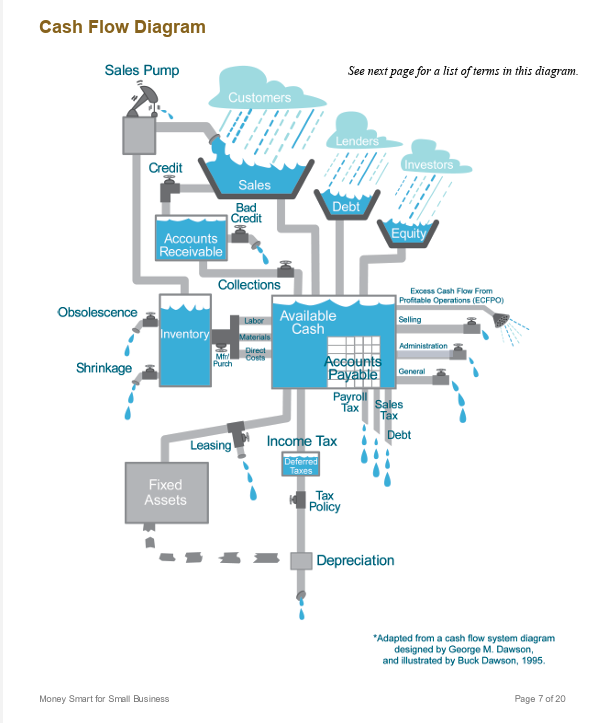
Green-industry cash flow follows a pattern. You’re flush in peak season and scrambling in winter. Businesses that scale learn to smooth that curve. The SBA’s guide to managing your finances is a solid, free starting point.
- Know your burn rate. Add up the fixed costs that run year-round — insurance, truck payments, storage, minimum staffing. That’s your survival number.
- Build winter reserves in summer. If your burn rate is $15,000/month and you have four or five slow months, you need $60,000–75,000 in reserves. Set aside a slice of every peak-season payment. SCORE’s cash flow resources include a free 12-month projection template.
- Add recurring services. Maintenance contracts, snow removal, holiday lighting. Off-season revenue lowers how much you need to bank.
Avoid the Common Growth Danger Zones
These are the scaling mistakes that tank landscaping businesses:
- Growing crews before systems: Hiring people to solve problems that are actually system problems just creates expensive chaos.
- Buying equipment to ‘look professional’: As a result, that $40,000 mini excavator sits unused 200 days a year while you’re making payments. Rent until utilization justifies ownership.
- Underpricing to win work: Competing on price is a race to bankruptcy. You can’t scale on 5% margins.
DOWNLOADABLE RESOURCE: True Cost Per Job Calculator — A spreadsheet template that calculates your real labor burden, equipment costs, admin time, and true profit margins. Stop guessing, start knowing.
Part 2: Strategic Cost Cutting That Doesn’t Hurt Growth
Not all expenses are equal. The goal isn’t to cut everywhere. It’s to kill waste while protecting what drives revenue.
Cut these without impact
- Unused software. That premium CRM you never set up? The advanced tier you don’t touch? Downgrade or cancel.
- Redundant tools. Three brands of hedge trimmers? Consolidate, sell the extras, simplify maintenance.
- Excess overhead. If your gear fits a smaller yard, or you can run admin from home, that rent savings goes straight to profit.
Let technology replace recurring costs
- Scheduling software ($30–80/month) can save 5–10 hours a week of manual routing. At $50/hour for your time, that’s $1,000–2,000/month back.
- Digital proposal systems cut printing and hand-delivery. Faster quotes, cleaner follow-up.
- Automated follow-up never forgets to call a prospect back. Systems don’t drop the ball.
Negotiate with suppliers
- Use volume. Even small operators gain leverage by consolidating buys. “You get all my mulch and stone business if you can do 10% better.”
- Talk seasonally. Ask about spring pricing in winter. Suppliers want to lock you in during their slow months.
- Terms beat discounts. Net-30 or Net-45 helps cash flow more than a 2% discount. You finish and invoice before you pay for materials.
Preserve cash on equipment
- Rent specialty gear. Need a stump grinder a few times a month? Rental beats ownership.
- Buy used for daily drivers. Mowers, trimmers, blowers you run every day — quality used at 50–60% off new.
- Do the maintenance math. When annual upkeep tops 40% of replacement value, upgrade. Until then, keep what’s reliable.
DOWNLOADABLE RESOURCE: Equipment Decision Worksheet: Buy, Rent, or Sub — A decision tree that calculates true ownership costs vs. rental costs vs. subcontracting to help you make smart equipment investments.
Part 3: Revenue Optimization First (The Fastest Path to Scale)
Here’s the part that changes everything. You can likely lift revenue 20–30% without landing a single new customer. Most businesses sit on untapped revenue in their current clients and lead flow. That’s how you scale a landscaping business on a budget — squeeze more from what you already have before chasing what you don’t.
Raise prices strategically (without losing clients)
Haven’t raised prices in the last year? You’re leaving real money behind. Fuel, labor, materials — everything went up. Your prices should too.
How to communicate it:
- Give notice. “Starting April 1, rates rise 10% to reflect higher costs. As a valued client, we wanted you to know early.”
- Frame it as industry-wide. This isn’t greed. It’s staying in business in a changing market.
- Grandfather your best clients. Your top 20% might keep the old rate a season. Everyone else moves up.
Most owners lose fewer clients than they fear from a fair 8–15% increase. The ones who leave are usually your most price-sensitive, lowest-margin clients anyway. Revenue often goes up while stress goes down.
And this is where the “lower prices to win work” myth finally dies. The businesses that survive don’t win on being cheapest. They win on being clear, reliable, and worth it.
Add high-margin services now
These need little new equipment but command premium pricing:
- Drainage corrections. “I noticed water pooling near your foundation — we can fix that for $800–1,200.” Often a same-day add-on at 60%+ margins.
- Seasonal color rotation. Swap annuals 2–4 times a year. Recurring revenue, high perceived value, low labor.
- Erosion control and mulch top-dressing. “Your beds have settled — let’s refresh before the summer heat.” Easy spring upsell.
- Preventative maintenance programs. Fertilization, pest control, pruning schedules. Clients love the convenience. You love the predictable revenue.
Improve your close rate
Close 25% of estimates instead of 40%, and you need 60% more leads just to break even. Fixing your proposal process is cheaper than buying more ads.
Response time that wins:
- Reply within 1–2 hours. Many homeowners stop shopping once they get a fast, helpful answer.
- Schedule the estimate within 24–48 hours of contact.
- Send the proposal within 24–48 hours of the visit. Tell them when to expect it, and back it up with a text.
A follow-up cadence that works:
- Day 1: Send the proposal.
- Day 3: Call or text. “Any questions on the proposal?”
- Day 7: Share a project photo or answer a common objection.
- Day 14: “We have an opening next week if you’d like to move forward.”
Make proposals clearer:
- Add site photos with notes on what you’ll do.
- Break big projects into phases so the price feels manageable.
- Offer good/better/best options. Most people pick the middle.
- Add a deadline: “Valid for 30 days.”
- Include care instructions and your terms and conditions.
Upsell current clients (ethically)
Your clients already trust you. It’s far cheaper to sell to them than to chase new ones. Yet most owners treat every client as a one-time job.
- Train crews to spot opportunities. “I saw some dead spots — you might want to overseed this fall.”
- Take photos and text them. “Noticed this drainage issue. Want an estimate?”
- Use a site checklist. Have crews fill out a quick assessment after every visit.
Bundle by season:
- Spring: cleanup + mulch + fertilization.
- Summer: mowing + monthly treatments + irrigation check.
- Fall: leaf removal + aeration + winterization.
And frame it around outcomes. Don’t sell “fertilization.” Sell “a healthy lawn all season, with no bare spots or weeds.” People pay premium prices to avoid problems, not to buy products.
DOWNLOADABLE RESOURCE: Landscape Proposal Profit Booster Checklist — A template that walks you through creating proposals that close at 40%+ rates with higher per-project values.

Part 4: Smart Growth Investments (What Pays Back Fast)
Once you’ve fixed pricing, tightened operations, and maxed current revenue, you’re ready to invest. But not all investments are equal. Focus on moves that pay back within 90 days.
Investments that pay back in 90 days
The fastest ROI comes from systems, not stuff.
- Process documentation. Spend 10–15 hours writing steps for estimates, jobs, and invoicing. New hires get productive in days, not weeks. Cut training from 40 hours to 10 at a $25 burden, and you save $750 per hire.
- Automated invoicing. Getting paid 5–7 days faster frees up cash. On $20,000/month, one week faster is $5,000 in working capital.
- Lead response automation. An instant reply to every form fill lifts close rates 15–20%. On 50 leads a month at a $2,000 average, that’s $15,000–20,000 in new revenue.
Virtual support vs. a full-time hire (growth without hiring)
This is where the right support changes your whole timeline. Before you hire your next full-time employee, compare the real numbers.
Full-time admin employee:
- Salary: $35,000–45,000/year
- Payroll taxes and benefits: $7,000–11,000/year
- Office space and equipment: $3,000–5,000/year
- 80–120 hours of your time to train and onboard
- First-year cost: $45,000–61,000
A virtual assistant for landscapers (industry-specialized):
- Part-time support (20 hrs/week): $4,800/month
- No payroll taxes, benefits, or equipment
- Minimal training — they already know the industry
- Scales with your season; you pay only for hours worked
- Annual cost: $18,000–50,000
The flexibility matters even more than the savings. Virtual support flexes with your season — more hours in peak, fewer in winter. You’re not paying someone to sit idle in January.
Technology with immediate ROI
- CRM / lead management ($50–150/month). Close two more jobs a month at $1,500 and that’s a 10–30x return.
- GPS tracking ($25–40 per vehicle/month). Cuts fuel 10–15%, tightens routing, proves service. Typical payback: 30 days.
- Online payments. Get paid on the spot instead of waiting on checks.
Marketing that generates cash (not just “awareness”)
- Google Business Profile (free). A large share of local service searches happen on Google. Good photos, weekly posts, and client reviews can grow your inbound leads for $0.
- Referral incentives. “Refer a friend, get $100 off.” If a client is worth $3,000 over their lifetime, $100 is a bargain.
- Job-site signage. A $200 sign in a visible neighborhood can bring 5–10 inquiries. Close two at $2,000 and that’s a 20x return.
DOWNLOADABLE RESOURCE: 90-Day Growth Investment Planner — A prioritized action plan that shows which investments will give you the fastest payback based on your current business size.
Bonus: The $750K–$2M Scaling Gap
There’s a pattern in green-industry growth. Companies cruise from $0–$300K. They push to $500K–750K with some struggle. Then they hit a wall.
Sound familiar? This is the $750K–$2M gap where most businesses stall. The problem isn’t demand or skill. It’s that the systems that got you to $750K now hold you back.
Why businesses stall here
- Everything depends on you. You answer every call, approve every estimate, run every crew. You’ve hit your personal limit.
- No standard processes. Quality depends on which crew shows up. Training takes months because it’s all “just how we do it.”
- Cash flow gets shaky. Bigger jobs mean bigger outlays. One late payment creates a crisis.
- You’re afraid to raise prices. Comfortable feels safe. Change feels risky.
What changes at each level
- $0–300K: You are the business. Success runs on your hustle.
- $300K–750K: You have crews. You’ve handed off field work but still control everything important.
- $750K–1.5M (the breakthrough): Systematize or stall. You need a crew leader who runs jobs without you, standard processes, admin support, and real-time profitability per job.
- $1.5M–$2M+: You’re building a company, not running a big one-person show. Multiple crews, managers, dedicated sales, systems for everything.
Systems that unlock the next stage
- Documented processes. Written steps for estimates, jobs, invoicing, and follow-up. If it lives in your head, it can’t scale.
- Lead qualification. Stop chasing every lead. Define your ideal client and qualify hard. You need fewer, better customers.
-
- Tiered offerings. Basic, premium, luxury. Different margins, different expectations.
- Real-time financials. Know your numbers weekly, not quarterly.
- A delegation framework. Clear authority so crew leaders handle the field and you focus on growth.
Real-World Success Story: From Overwhelmed to Optimized
A hydroseeding and landscaping company faced exactly this tension. Strong demand for DOT, commercial, and residential work — but admin systems that hadn’t kept pace.
The problem
- Certified payroll and invoicing ran months behind, creating serious cash flow instability.
- No central system for contracts or correspondence. Everything lived in scattered emails.
- The owner, often in the field, missed calls and lost leads.
- Change orders caused constant confusion, disputes, and unpaid work.
The usual advice would be: hire a full-time office manager, buy better software, work harder. But that doesn’t fix the real problem — the lack of systems.
The Solution (Virtual, Specialized Support + Systems)
The solution (specialized virtual support + systems)
Instead of adding expensive overhead, the company brought in Offshoot’s virtual support with deep landscaping knowledge. Not generic phone answering. Someone who could:
- Build central file systems for contracts and correspondence. Instant access instead of 20-minute email hunts.
- Coordinate plant procurement and deliveries using industry knowledge to work with suppliers.
- Handle customer calls with the horticultural know-how to answer questions and convert leads.
- Create estimating systems tracking invoicing schedules, bond rates, certified payroll, and change orders.
- Set job completion protocols requiring location details, scope, photos, and inspector sign-off before work began — ending disputes and billing errors.
The results
- Nearly 35% increase in cash flow in the first year.
- Hundreds of thousands in new contracts over two years.
- 20–30 hours saved monthly on paperwork and invoicing.
- Faster bid turnaround, raising win rates.
- Better contractor relationships. One general contractor adopted the response form across its entire subcontractor network.
What makes this story relevant to how to scale a landscaping business on a budget? Instead, the transformation didn’t come from buying equipment, hiring multiple employees, or expensive marketing. It came from implementing systems and strategic virtual support—at a fraction of the cost of a full-time hire.
Your Next Steps: The 90-Day Blueprint
Scaling on a budget isn’t one big move. It’s small, sequential improvements that compound.
Month 1 — Know your numbers. Calculate true cost per hour. Find hidden drains. Map seasonal cash flow. Audit expenses for cuts.
Month 2 — Optimize revenue. Roll out a strategic price increase. Add 1–2 high-margin services. Improve proposal follow-up. Build an upsell checklist.
Month 3 — Invest strategically. Document core processes. Weigh virtual support vs. a full-time hire. Add 1–2 key tools. Launch one high-ROI marketing move.
The businesses that scale do it by building systems, not just capacity. They fix pricing before chasing volume. They invest in processes before people. That’s how you scale a landscaping business without the risk that sinks so many others.
Ready to Scale Without the Stress?
If you’re spending 15+ hours a week on estimates, invoicing, scheduling, and calls instead of running crews or landing bigger projects, it’s time to delegate.
Book a free 30-minute strategy session and see how specialized virtual support can free up 20–30 hours a month — without the cost of a full-time hire.
Prefer to start on your own? Grab the free Landscape Business Budget Optimizer spreadsheet — job costing calculator, cash flow planner, equipment decision framework, and a pricing business check.
Still Doing Admin That Someone Else Could Handle?
If you’re spending 15+ hours a week on estimates, invoicing, scheduling, and phone calls instead of running crews or landing bigger projects, it’s time to delegate strategically.
Book a FREE 30-minute strategy session to see how specialized virtual support can free up 20-30 hours monthly—without the cost of a full-time employee.
Link text


