
Angi Reviews: Is It Worth It for Landscapers?
Angi (formerly Angie’s List) is worth it for landscapers who actively manage their profile. That means responding to leads within minutes, keeping photos current, and tracking real cost per job. It’s not free lead flow: expect to pay per lead and put in ongoing effort. Google reviews remain the stronger long-term investment for most landscaping businesses.
You’ve probably heard both sides. One landscaper swears Angi keeps their calendar full. Another says it’s a waste of money that sells the same lead to five competitors. Both are telling the truth about their own experience — the difference usually comes down to how the profile gets managed, not the platform itself.
I’ve run Angi profiles for green-industry clients since it was still called Angie’s List. So let’s clear something up first: Angie’s List became Angi in 2021. If you’re still hearing “Angie’s List” from a marketing consultant or an old blog post, that’s your sign the advice is out of date. The name changed. So did the model.
What Is Angi (Formerly Angie’s List)?
Angi is a home-services marketplace where homeowners search for contractors, read reviews, and request quotes. Landscapers create a free business profile and list their services and service areas. From there, they can pay to appear higher in search results or to receive matched leads through Angi Leads, Angi’s pay-per-lead product.
Is Angi Worth It for Landscapers?
Here’s my honest verdict: yes, if you treat it like an active channel, not a passive listing. The landscapers who complain that “Angi leads are garbage” are usually the ones who built a profile once and walked away. The ones who see it pay off respond fast, keep their photos current, and track what each lead actually costs them.
That second group also budgets for it correctly. So, before you decide, you need to understand what Angi actually costs today, because that’s changed too.
The Angi Cost Landscapers Often Miss
A lot of contractors still think of Angi the way it worked ten years ago: sign up free, collect reviews, done. That’s the myth worth busting. Angi still has a free basic profile. Its lead-generation product, Angi Leads, is pay-per-lead — typically $15 to $85 per shared lead, depending on your trade and market. You’re often not the only contractor who gets that lead, either; several companies may be quoting the same homeowner at once.
That’s not automatically a bad deal. If you’re converting one in five leads at $50 each, your cost per job is $250. On an $800 average job, that’s still profitable. But if you sign up expecting free, exclusive referrals like the old Angie’s List model, you’ll be disappointed. That disappointment is usually a budgeting mismatch, not a platform failure.
How to Make Angi Actually Work
If you decide to give it a real shot, three things separate the landscapers who profit from Angi from the ones who don’t:
- Respond within minutes, not hours. Homeowners requesting quotes on Angi are usually contacting several contractors at once. The first response often wins the job before price even comes up.
- Keep your profile active. Current photos, an updated service list, and a filled-out “about us” section all affect where you rank in search on the platform.
- Track your real cost per job won, not just cost per lead. A $70 lead that turns into a $3,000 install is a different math problem than a $70 lead that goes nowhere.
How to Fill Out Your Angi Profile So It Actually Attracts Clients
A half-finished profile is one of the biggest reasons landscapers say Angi “doesn’t work.” Angi’s own matching algorithm favors complete profiles, and homeowners scrolling through reviews and listings skip past thin ones fast. Here’s what to fill out, in order of impact:
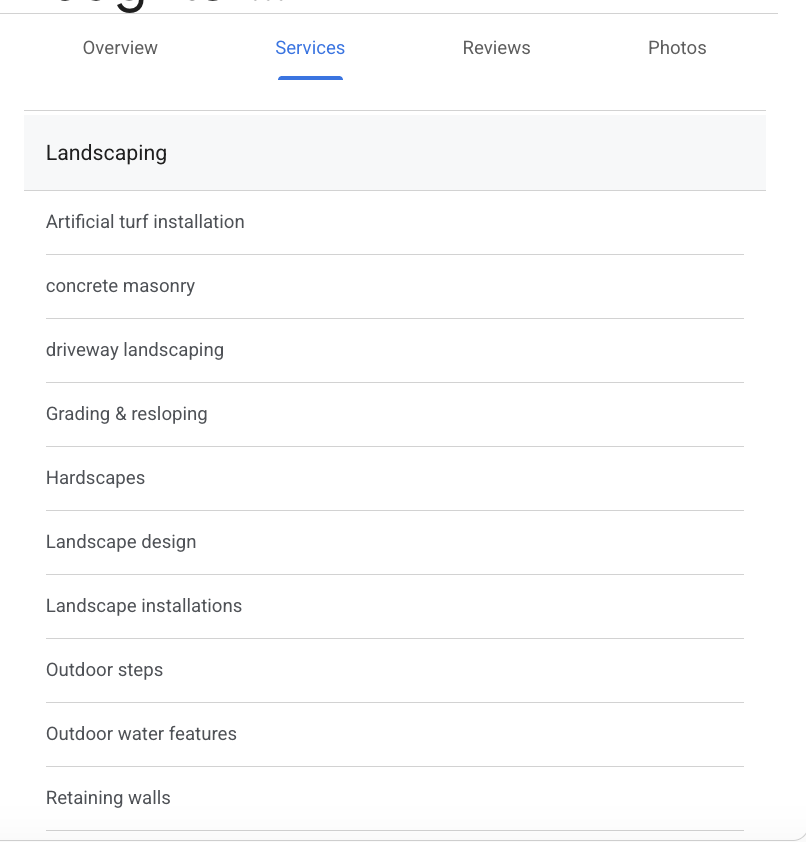
- Every service category you actually offer. Don’t just list “landscaping” — break it out into mowing, hardscaping, irrigation, hydroseeding, tree care, whatever applies. Angi matches leads by category, so a missing category means missed leads, plain and simple.
- Your real service area, down to the zip code. List the towns you actually want work in, not your whole region. Vague or oversized service areas bring in leads you’ll just have to decline, which wastes your response-time score.
- Before-and-after photos for each category — and make them actually good. This is a marketing channel, not an afterthought, so treat the photos that way. If your crew leader isn’t confident behind a camera, assign someone specifically to catch the before-and-after shot and set it up properly. Don’t just grab a quick phone pic on the way to the truck. A few basics that separate a professional-looking profile from an amateur one:
-
- Shoot with the sun behind you, not in front of you. A shot straight into the sun washes out the photo or leaves your work in silhouette. Position yourself so the light falls on the yard, not the lens.
- Get enough light — don’t settle for a dark, muddy photo. Early morning or late afternoon light is usually your friend. Harsh midday sun can work too, but avoid shooting in shade with a bright background — that combination tricks the camera into underexposing the shot.
- Take the “before” from the same angle you’ll use for the “after.” Side-by-side shots only sell the transformation if they’re framed the same way.
- Upload work from every service you list, not just your favorite category. A profile with 15 sharp, well-lit project photos will always outperform one with a stock header image and a handful of dim snapshots.
4. License, insurance, and certifications, front and center. This is trust-building on sight; homeowners comparing five contractors will often eliminate anyone who hasn’t listed proof of insurance before they even read a review.
5. Payment options, warranties, and any senior or military discounts. These are small fields, but they’re often the tiebreaker between two similarly-reviewed contractors.
6. Business hours and lead notifications set correctly. Response speed is what wins jobs on Angi. Make sure notifications actually reach your phone the moment a lead comes in, not buried in an inbox you check once a day.
7. A short, real “about us” bio. A few sentences on how long you’ve been in business, what you specialize in, and what makes your crew different. Skip the corporate copy-paste; homeowners respond to a genuine voice.
8. Seed it with your first few reviews before you spend a dime on leads. Ask two or three recent happy clients for an Angi review before you turn on paid visibility. A profile with zero reviews next to competitors with 50 will lose the click every time, no matter how complete the rest of it is.
Run through that list once at setup, then revisit it every few months. Stale photos and an outdated service area quietly cost you leads without ever showing up as an obvious problem.
Angi: Pros and Cons for Landscapers
| Pros | Cons |
|---|---|
| Free basic profile and business listing | Leads are often shared with multiple contractors |
| Built-in review and rating system homeowners trust | Pay-per-lead costs add up if response time is slow |
| Service-area and category targeting | Ranking favors contractors who pay for visibility |
| Good for filling calendar gaps in slow weeks | Not a substitute for owned marketing like Google reviews |
Getting Reviews and Referrals Through Angi
If you do keep an Angi profile, your reviews there still matter. Angi’s system lets happy clients leave a graded review, covering price, quality, responsiveness, punctuality, and professionalism, and gives you a chance to respond to every one, good or bad.
To ask for a review, keep it simple. Send a quick follow-up call or email after the job wraps. Then give the client a direct link to your Angi review page rather than asking them to hunt for it. One heads-up here: the FTC has tightened disclosure rules. Never pay for a review or trade a discount for a “good” one without the client disclosing that in the review itself. Ask for honest feedback, not glowing feedback, since the honest reviews are the ones that actually build trust with the next homeowner reading them.
If a review comes in negative, respond calmly and factually. Skip the defensiveness. A short, professional reply to a bad review often reassures future clients more than a page of five-star ratings does.
How to Get More Google Reviews for Your Landscaping Business
Here’s the thing: while Angi can fill gaps, Google reviews are the asset that compounds. They’re free to collect, they show up the moment someone searches “landscaper near me,” and you’re not sharing that lead with anyone.
A few starting moves:
- Ask right after the job, while the yard looks its best and the client is happy.
- Send a direct link, not just a request. Google’s own review-link generator makes this a one-click process for the client.
- Make it part of your workflow, not an afterthought. A canned email response or a line in your invoice template works well.
I’ve already written two deeper guides on this if you want the full playbook. How to Get Reviews for Your Landscape Business walks through setting up review links across Google, Facebook, and Houzz. 3 Ideas to Market Your Reviews shows you what to actually do with reviews once you have them — case studies, video testimonials, pulling quotes for your marketing.
Angi vs. Google Reviews: Where Should You Focus?
Think of it this way: Angi is a paid supplement, and Google reviews are the owned asset. If your budget is tight, put your energy into Google reviews first. They’re free, they build over time, and they show up everywhere a prospect looks, not just inside one platform. Add Angi on top once your Google presence is solid and you have room to test a paid lead channel.

You Don’t Have to Manage This Alone
I’ve built and maintained Angi and Google review systems for green-industry clients for years now: the profile updates, the review-request follow-ups, the response tracking. It’s the kind of task that’s easy to let slide when you’re running crews all day. It’s also exactly the task that determines whether Angi pays off or feels like a waste of money.
If you’d rather have someone else keep your review pipeline moving while you focus on the field, book a consultation with Offshoot Virtual Landscape Services. Let’s talk about what that could look like for your business.
Frequently Asked Questions
Is Angi the same as Angie’s List?
Yes. Angie’s List rebranded to Angi in 2021. The core concept is the same, but pricing and lead structure have changed since the original free model.
How much does Angi cost for landscapers?
A basic profile is free. Angi Leads, the pay-per-lead product, typically runs $15 to $85 per lead depending on trade and market, plus optional membership fees for added visibility.
Are Angi leads exclusive to my business?
Not usually. Most leads are shared with multiple contractors, which is why response speed matters so much for conversion.
Should landscapers focus on Angi or Google reviews?
Start with Google reviews, since they’re free and build long-term visibility. Add Angi as a supplemental paid channel once your Google presence is established.
Can I pay clients for good reviews?
No. FTC disclosure rules require you to disclose any incentivized review. Ask for honest reviews, not necessarily glowing ones.
You Don’t Have to Manage This Alone
I’ve built and maintained Angi and Google review systems for green-industry clients for years: profile updates, review-request follow-ups, and response tracking. It’s the kind of task that’s easy to let slide when you’re running crews all day. It’s also exactly the task that determines whether Angi pays off or feels like a waste of money.
If you’d rather have someone else keep your review pipeline moving while you focus on the field, book a consultation with Offshoot Virtual Landscape Services. Let’s talk about what that could look like for your business.
Debbie Neese — 14+ years in the green industry, Horticulture Certification.


