
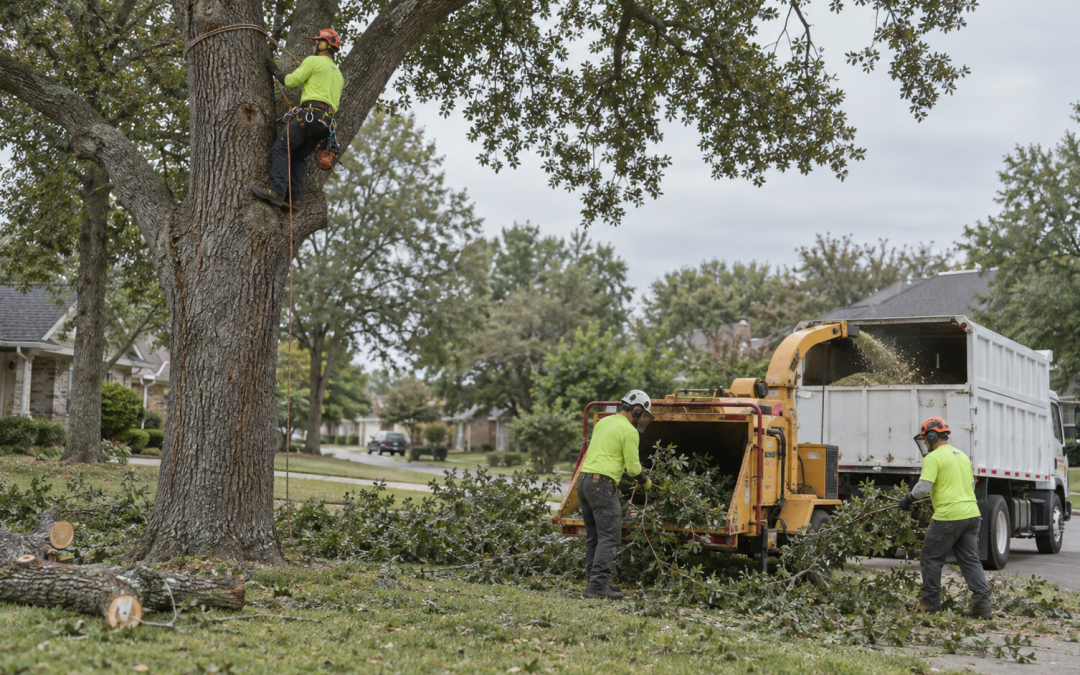
Tree Service Marketing for Owners Who’d Rather Be in the Tree
by Debbie Neese | Horticulture Certified, green industry since 2010
Tree service marketing works best when it starts with the phone, not the logo. Answer fast, keep your Google profile current, put your certifications where homeowners can see them, and ask every customer for a review. Those four habits beat any ad budget for a small tree outfit.
Your cell buzzed four times before lunch. You were sixty feet up with a saw running, so of course you didn’t hear it. Then the chipper ran until five, you got home at six-thirty, and you finally called that lady back on Thursday morning. She’d already hired somebody else on Tuesday.
That’s the whole problem with tree service marketing in one afternoon. You’re not bad at business. You’re busy doing dangerous, skilled work that nobody else on your street could do. Meanwhile, the jobs go to whoever picked up the phone.
So let’s fix the part that actually loses you money.
Why tree service marketing advice never sticks
Search this topic, and you’ll find a dozen articles promising eleven ideas, or sixteen strategies, or twenty tips. Most of them are written by software companies and ad agencies. They’ll tell you to build a funnel, run Google Ads, post consistently, and track your cost per lead.
Here’s what they leave out. Somebody has to do all of that. And right now that somebody is you, at nine at night, after a day of climbing.
The truth is that you’re a tree guy. You know load angles and decay pockets and how a silver maple splits. But the computer side? The follow-up calls, the review requests, the posting schedule? That work piles up and grows.
You shouldn’t have to pick between running your crew and running your office. Still, most small tree companies end up doing exactly that.
A tree service marketing plan you can actually run
Forget the twenty-tactic list for a minute. Below are five moves, in the order they pay off. Work them top to bottom, because the first one earns money this week and the last one earns money next year.
1. Answer the phone, or get somebody who will
This is the cheapest, fastest money in the entire post. A homeowner with a limb over their roof is not shopping around for a week. They’re calling three numbers and hiring the first one that answers like a professional.
So take a hard look at what happens when your phone rings and you can’t answer.
- Does it ring out, or does it go to voicemail?
- Does your voicemail sound like a business, or like a guy in a truck?
- Does anybody call those people back the same day?
- Do you write down what they wanted, or trust you’ll remember?
If you’re the only one who answers, you’re capped. No version of you can safely run a saw and take a call at the same time. So the fix is coverage, not willpower. A crew member on light duty, a family member with a laptop, or a virtual receptionist can all work — as long as somebody picks up.
For the scripts and the setup, I walked through this in detail in the best ways to answer your business phone. If your problem is more about catching calls in the field, these phone apps and systems handle the routing side.

2. Own your Google Business Profile
When a storm drops an oak across a driveway, nobody opens a browser and types your company name. They search “tree removal near me,” and they tap one of the top three map results.
That map listing is your Google Business Profile, and it’s free. Yet most small tree companies set theirs up once in 2019 and never touched it again.
Fix these five things, and you’ll move up:
- Confirm your service area and hours. Add emergency availability if you offer it.
- List every service separately — removal, trimming, stump grinding, cabling, storm cleanup, lot clearing.
- Upload fresh photos monthly. Job photos, crew photos, equipment photos.
- Post updates. Even a short note about storm response keeps the listing active.
- Answer the Q&A section yourself before somebody else answers wrong.
I broke the whole process step by step in the Google Business Profile guide for green industry companies. Start there if your listing has been sitting untouched.
3. Put your credentials right up front
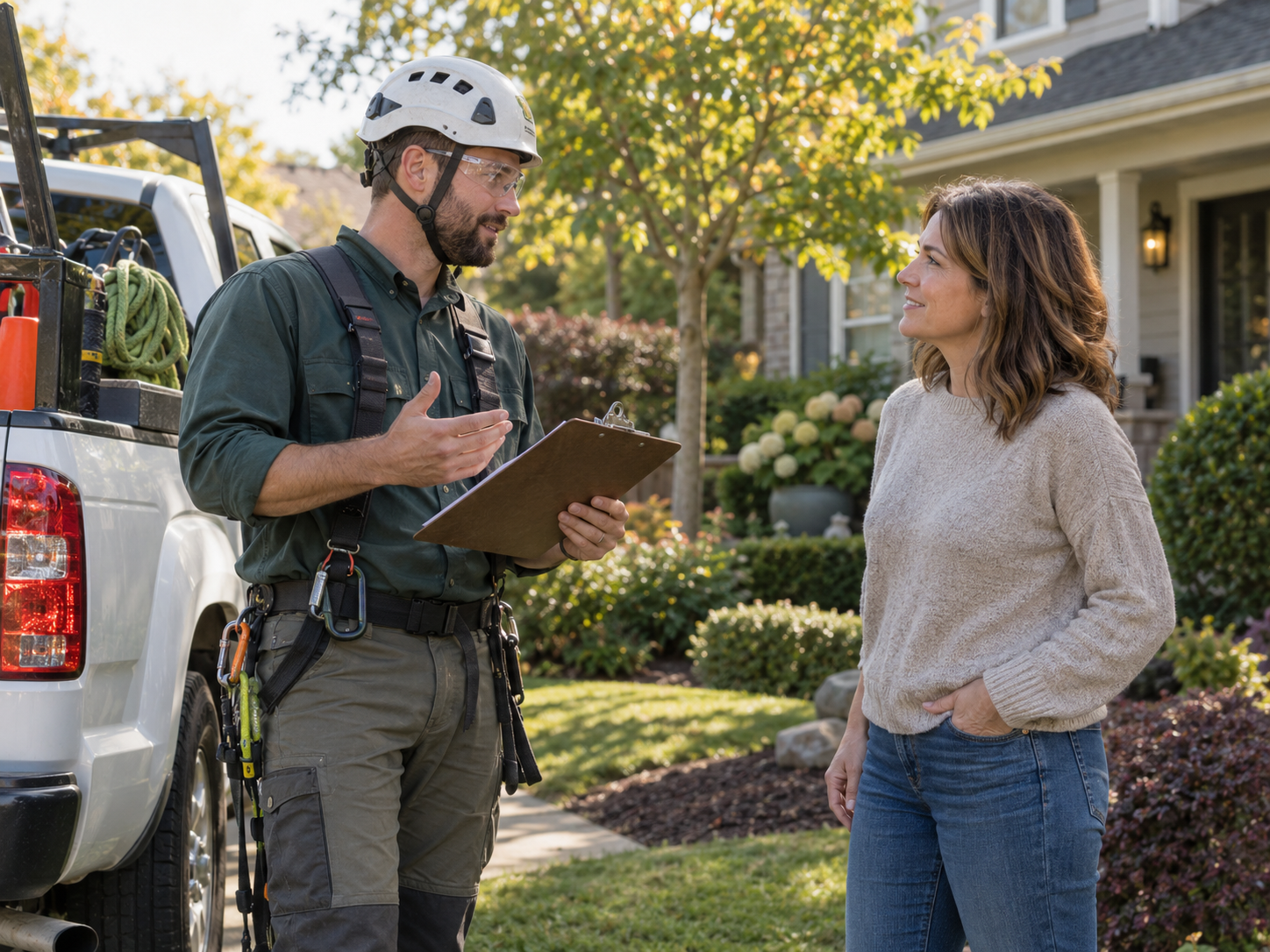
Here’s an advantage you have that landscapers don’t. Tree work scares people. Homeowners know a bad cut can drop a limb through a bedroom, so they’re actively looking for proof you know what you’re doing.
The International Society of Arboriculture tells homeowners to look for ISA Certified Arborist credentials. That certification documents knowledge of tree biology, diagnosis, maintenance practices, and safety. Holders also must keep up with continuing education to maintain it (ISA, Why Hire an Arborist). On top of that, ISA runs a public Find an Arborist directory that homeowners actually use.
So if you’re certified, say so everywhere. Put it on your truck, voicemail greeting, Google profile description, estimates, and shirts. Also make sure you’re listed in that directory.
If you’re not certified yet, that’s a real business decision worth pricing out. In the meantime, lead with what you do carry — liability coverage, workers’ comp, years in business, and the fact that you clean up completely.
4. Build a review engine, not a review hope
Reviews decide who gets called. Still, most owners only ask when a customer gushes, which means you collect maybe one review a quarter.
Instead, build a habit. Ask every single customer, the same way, every time. My method with clients is simple: call a few days after the job, ask whether everything looks right and whether they need something else, then send a direct review link by email or text. One reminder, and that’s it.
That call does double duty. Sometimes you find a problem while it’s still cheap to fix. Other times, you find another $1,800 of work in the backyard.
I laid out the full script and timing in how to ask customers for reviews. Once you’ve got a stack of them, these three ideas for marketing your reviews show you how to put them to work instead of letting them sit on a page.
5. Show the work
Tree work photographs better than almost anything in the green industry. A hundred-foot pine coming down in sections is genuinely interesting to watch, even to people who will never hire you.
Therefore, the content practically writes itself:
- Before-and-after shots of a removal, side by side
- A short clip of a controlled drop, or the chipper eating a brush pile
- The bucket truck at full extension
- A stump ground flush with the lawn, with the mess already raked out
- Your crew in matching shirts, gear on, looking like professionals
Two rules make or break this. First, take the “before” photo before you start, because you cannot go back for it. Second, keep the lens clean and shoot in decent light, since blurry photos read as sloppy work.
For what to actually write underneath them, I’ve got a batch of post ideas you can schedule a month at a time.
Storm season: the tree service advertising window nobody plans for
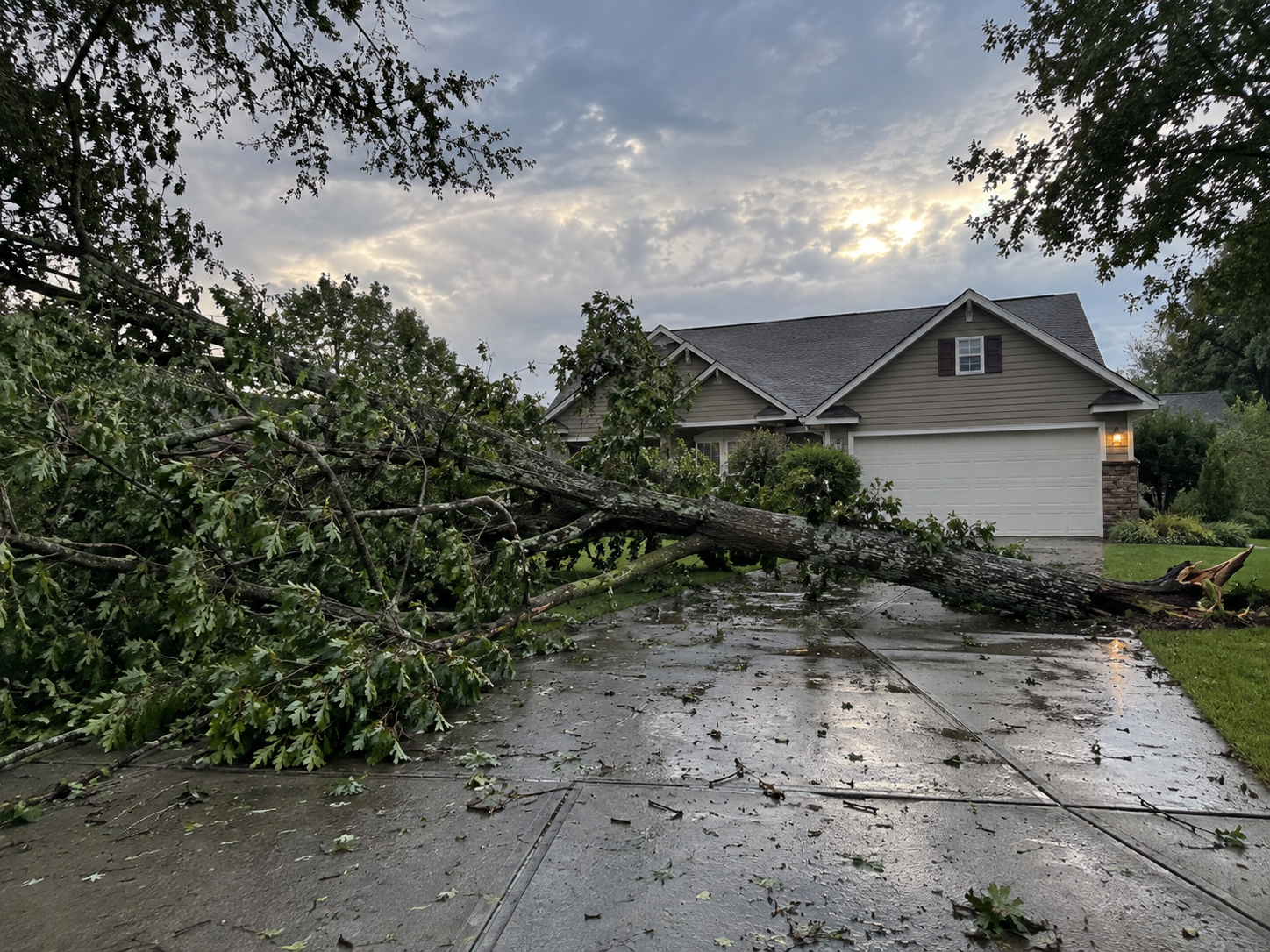
Hurricanes, ice storms, straight-line winds. After a big weather event, demand for tree work spikes for weeks, and it is the single best tree service advertising window you get all year. Yet almost nobody prepares for it, because you’re too busy actually cutting.
The trick is doing the office work before the weather hits.
Before the storm
Get this handled in the slow weeks so you’re not scrambling:
- Update your Google profile with emergency service and after-hours availability.
- Record a voicemail greeting that mentions storm response.
- Write a one-page intake sheet: name, address, what fell, is anything on the house, is anybody blocked in
- Decide your emergency rate now, in writing, so nobody negotiates it at 10 p.m.
- Line up who answers the phone when everything breaks loose at once
During the storm
When the calls stack up, triage beats speed. Life safety and structures come first. Driveways blocking a car come next. Everything else goes on a list with a callback date and an honest timeline.
Above all, tell people the truth about when you’ll get there. A homeowner who hears “Thursday, and here’s why” will wait. One who hears nothing calls the next guy.
After the storm
This is where the money hides, and almost everybody leaves it on the table. Those neighbors who watched your crew work for three days? They’re your warmest leads of the year.
So, within two weeks of the surge:
- Call everyone who was on your can-wait list. Book what’s left.
- Ask every storm customer for a review while the relief is fresh.
- Post your best storm photos. That’s proof you show up when it counts.
- Check on anything you spotted while you were there — the dead ash out back, the limb over the garage.
Seven tree service marketing ideas to run this month
Pick two. Honestly, two done well beats seven half-started.
- Door hangers on the street where you’re working. Neighbors already watched your crew. Cheap, local, and it converts.
- A yard sign while the job is in progress, with your number big enough to read from a car.
- Truck and trailer lettering with your phone number and “Certified Arborist” if that applies.
- Free winter walk-throughs for past customers, flagging dead and dying trees while your schedule has room.
- Referral thank-yous. A service credit toward their next trimming beats a gift card, because it brings them back.
- Two seasonal emails a year — one ahead of storm season, one before spring pruning.
- Partnerships with two or three local landscapers who don’t do tree work. They hit trees constantly and have nobody to hand them to.
What tree service marketing costs and how long it takes
Let’s set honest expectations, because the ad agencies rarely do.
The five moves above cost almost nothing but time. A Google profile is free. Reviews are free. Photos are free. Your real cost is somewhere between three and six hours a week of office work, plus whatever you pay someone to do it instead.
As for timing: answering the phone pays this week. Reviews and Google profile work usually show up in your call volume within one to three months. Consistent photo posting and referral partnerships take a season or two to build.
Paid ads are a different conversation. Google Local Services Ads can work well for tree removal, because the intent is urgent and local. Even so, ads amplify whatever system you already have. If nobody answers the phone, paid clicks just cost you more money to miss the same calls. So get the free five working first.
So who’s actually doing all this?
Let’s be straight with each other. Nothing above is complicated. It’s work, and it loses every time it competes with a job site.
I’ve worked in the green industry since 2010, and since 2012 I’ve run the office side for landscape, lawn care, and hydroseeding contractors — answering phones, keeping Google profiles current, chasing estimates, requesting reviews, and following up on jobs that were about to fall through the cracks. The trucks look a little different in tree work. The office work is the same.
That’s what Offshoot Virtual Landscape Services does. I step in as an extension of your team, so the phone gets answered, the follow-up happens, and the marketing you keep meaning to do actually gets done.
Because here’s what’s at stake if nothing changes. You stay busy in the good weeks and quiet in the bad ones. Estimates go out and never get a second call. The neighbor who watched your crew all day hires a guy from three towns away.
But when the office side runs? Your calls get answered on the first ring. Reviews stack up without you having to chase them. Then, when the wind takes a tree down, your name comes up first. And you get to spend your day where you’re actually the best in town — in the tree.
Tree service marketing FAQs
What is the best way to advertise a tree service?
Start with your Google Business Profile and your reviews, because urgent local searches drive most tree work. Then add visible, neighborhood-level advertising like yard signs, door hangers, and lettered trucks. Paid Local Services Ads work well once you reliably answer your phone.
How do I get more tree service leads without buying them?
Answer every call the same day, ask every customer for a review, post job photos consistently, and build referral relationships with local landscapers who don’t do tree work. Those four habits generate leads you own, not leads you rent.
How much should a tree service spend on marketing?
Many small contractors budget roughly 3% to 5% of revenue, though the five free habits in this post should come first. Spend money on ads only after your phone coverage, Google profile, and review process are working, since ads multiply whatever system already exists.
How long before tree service marketing brings in calls?
Answering the phone faster immediately improves your booking rate. Google profile updates and new reviews typically move call volume within one to three months. Referral partnerships and consistent posting build over a full season.
Do I need a website, or is a Google Business Profile enough?
A complete Google Business Profile gets you found and called, so it comes first. A simple website still helps, though, because homeowners comparing two companies want to see your services, your certifications, and your work before they call.
Ready to stop losing jobs to voicemail?
Your crews have the field covered. Your office needs coverage too. If the marketing side of your tree business keeps sliding to the bottom of the list, let’s talk about handing it off.
Book a consultation with Offshoot Virtual Landscape Services — we’ll look at where your calls are leaking and build a plan you can actually keep up with.
Debbie Neese is the founder of Offshoot Virtual Landscape Services, LLC, a virtual assistant and back-office firm serving green industry businesses across the U.S. She has worked in the green industry since 2010 and has run Offshoot since 2012, supporting landscapers, hydroseeders, lawn care companies, tree services, and NCDOT subcontractors. Debbie holds a Horticulture Certification and an Associate of Science in Business Administration, with deep expertise in DOT contract administration, certified payroll, SOP development, and green industry back-office operations. Her work has been featured in Martha Stewart, Southern Living, Men’s Journal, The Spruce, Well+Good, and Family Handyman.


